What Is Search Intent and Why Do SERPs Matter?
Search intent describes what the user is trying to achieve when they search.
SERPs are Google’s real-time feedback loop that reflect how users actually behave, not just what they type. These search intent behaviour patterns explain why similar keywords can return very different results.
Instead of guessing whether a keyword is informational or transactional, SERPs show:
- What format Google prefers
- How deep the answer should go
- Whether users are researching, comparing, or ready to act
This is why SERP analysis consistently outperforms keyword-only planning.
How Do SERPs Reveal Search Intent?
SERPs reflect user behaviour at scale.
Google adjusts results based on what users actually click, read, and engage with.
When analysing SERPs, look at three core layers:
- Page types ranking
- Content formats used
- SERP features present
Together, these reveal intent far more accurately than tools alone.
How Do You Identify Informational Intent from SERPs?
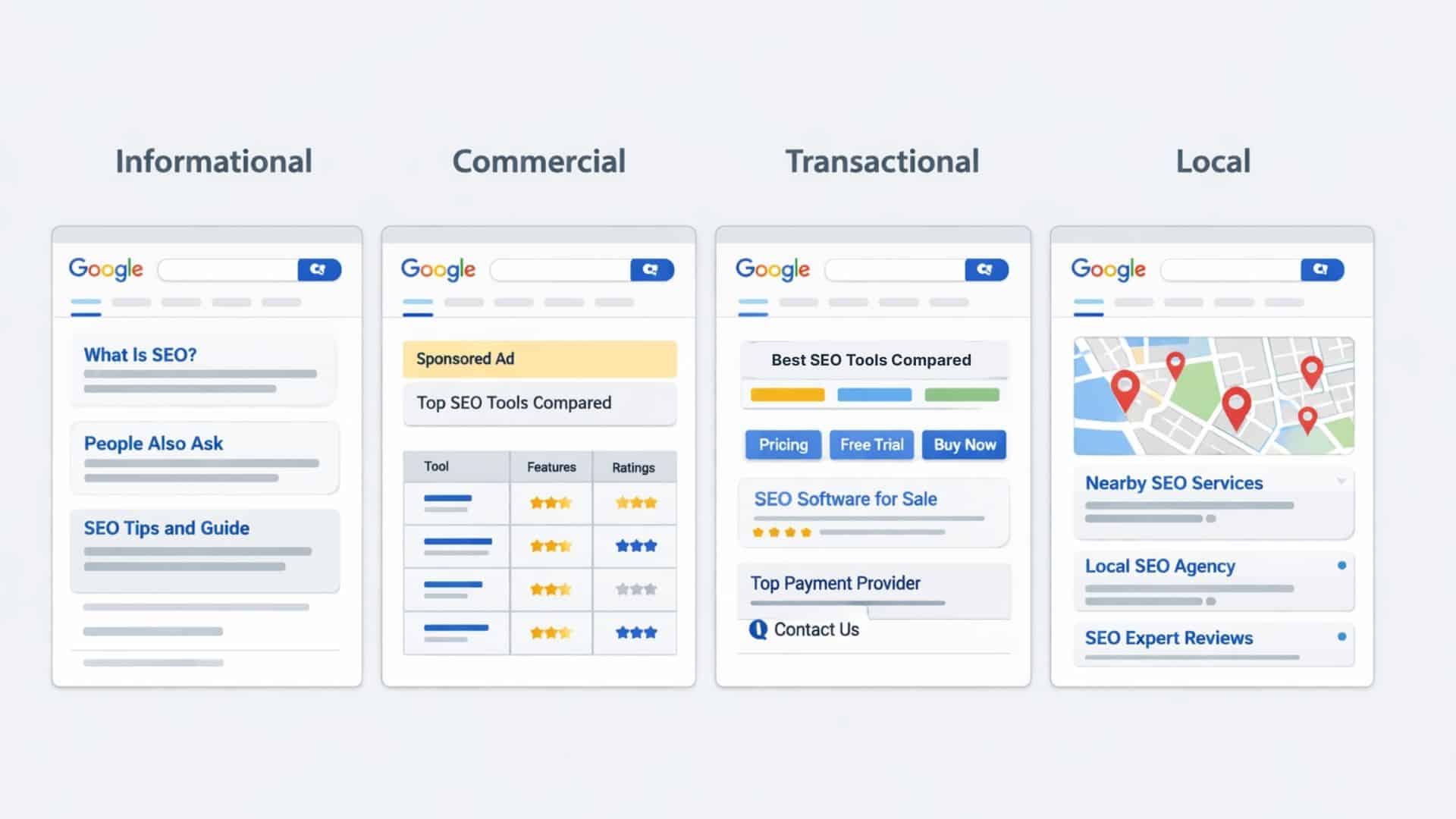
Informational intent SERPs focus on learning, not buying.
Common signals include:
- Blog posts, guides, and explainers dominating results
- Long-form educational content
- Featured snippets or People Also Ask boxes
- Few or no product or pricing pages
Example scenario:
A query like “what is search intent” returns definitions, step-by-step guides, and FAQs. Any sales page here will struggle to rank.
Content match required:
Educational structure, clear explanations, examples, and FAQs.
Features like People Also Ask and AI summaries reflect intent more clearly than rankings alone. These SERP features and AI-driven search trends show how Google interprets user needs in real time.
How Do You Identify Commercial Intent from SERPs?
Commercial intent SERPs sit between research and action.
Typical signals:
- Comparison articles ranking highly
- “Best,” “vs,” or “reviews” appearing in titles
- Listicles and evaluation-style content
- Light transactional elements without hard selling
Example scenario:
A query like “SEO tools for small teams” shows comparison blogs, not tool homepages alone.
Content match required:
Balanced comparisons, pros and cons, decision support, and credibility signals.
How Do You Identify Transactional Intent from SERPs?
Transactional intent SERPs indicate readiness to act.
Strong indicators include:
- Product pages, service pages, or landing pages
- Pricing, demos, or sign-up CTAs
- Minimal educational content
- Local packs or contact-focused layouts
Example scenario:
A query like “payment gateway provider” often returns service pages, not long blogs.
Content match required:
Clear value propositions, trust signals, and conversion paths.
How Do You Spot Local Intent in SERPs?
Local intent appears when proximity matters.
Key SERP signals:
- Google Map Pack
- Location-modified titles
- Business listings and directories
- Reviews and contact details surfaced prominently
Even without location words, Google may infer local need based on behaviour.
Content match required:
Location-aware pages, service relevance, and clear contact or enquiry options.
What Role Do SERP Features Play in Intent Analysis?
SERP features are intent shortcuts.
Common examples:
- Featured snippets signal concise, direct answers
- People Also Ask reveals follow-up questions users expect answered
- Shopping results indicate strong transactional intent
- Video carousels suggest visual or demonstrative learning
Ignoring SERP features often means missing the real question users are asking.
Why Format Matching Matters More Than Keyword Matching
Google does not rank “topics” only, it ranks formats.
If page one is dominated by:
- Lists, then lists outperform essays
- How-to guides, then opinion pieces struggle
- Comparison tables, then generic blogs underperform
This is a common gap among competitors who target the right keyword but publish the wrong structure.
Backlinko and Clearscope both highlight that format alignment is a ranking multiplier, not a minor optimisation.
How Do High-Performing Teams Use SERP Intent Analysis?
They reverse-engineer before they write.
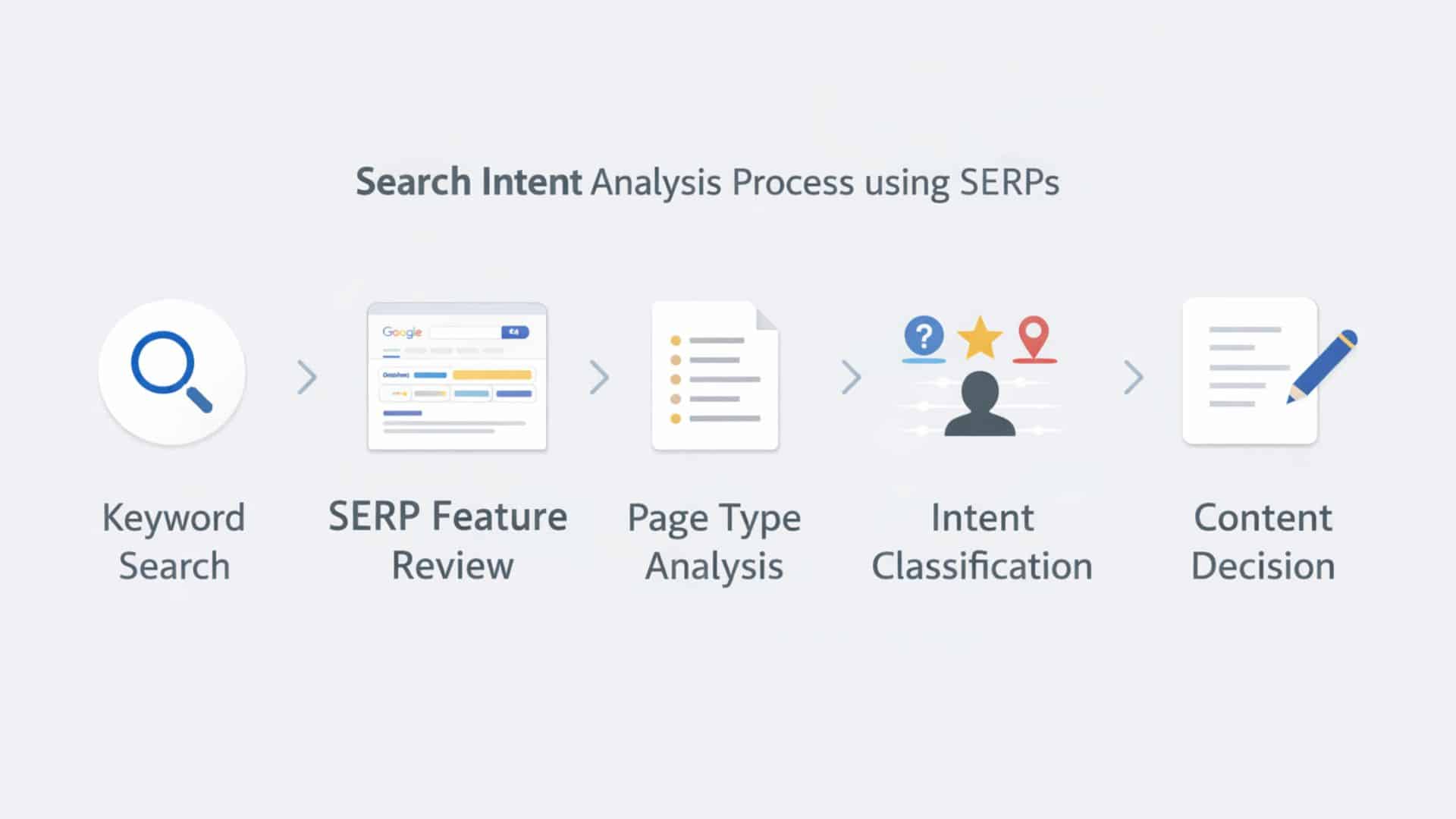
A typical workflow:
- Search the keyword manually
- Categorise top 10 results by intent and format
- Note SERP features and repeated subtopics
- Identify what is missing or weak
- Build content that fits intent but improves depth or clarity
This approach reduces wasted content and improves conversion relevance.
Common Mistakes When Analysing Search Intent
Mistake 1: Trusting tool labels blindly
Intent labels vary by tool and often lag behind real SERP behaviour.
Mistake 2: Mixing intents in one page
Trying to educate, compare, and sell in one page weakens alignment.
Mistake 3: Ignoring SERP changes
Intent can shift over time, especially in competitive or emerging topics.
How Does Search Intent Analysis Improve Business Outcomes?
Better intent alignment improves lead quality, not just rankings.
When content matches intent:
- Bounce rates drop
- Engagement increases
- Users progress naturally to next steps
- Sales conversations become more qualified
This is especially important in longer decision cycles where trust and clarity matter more than volume.
Conclusion: How to Analyse Search Intent Using SERPs
Analysing search intent through SERPs is not about chasing algorithms. It is about understanding how people search, what they expect to see, and why certain pages consistently rank ahead of others. When intent is matched correctly, content becomes easier to structure, rankings become more stable, and conversions improve naturally.
For teams looking to apply search intent analysis systematically across content, services, and landing pages, working with a structured SEO approach matters. At Rankpage, search intent analysis is embedded into how strategies are planned and executed, from content architecture to conversion pathways. You can explore how this approach fits into a broader SEO strategy on the Rankpage, SEO agency in Malaysia.