Quality Score in Google Ads measures how relevant and helpful your ads are, using factors like expected CTR, ad relevance, and landing page experience. It decides how much you pay and how often your ads appear.
If your ads are spending but not converting, the problem often starts with Quality Score.
This guide explains how the system works, why it matters, and the most reliable ways to improve it.
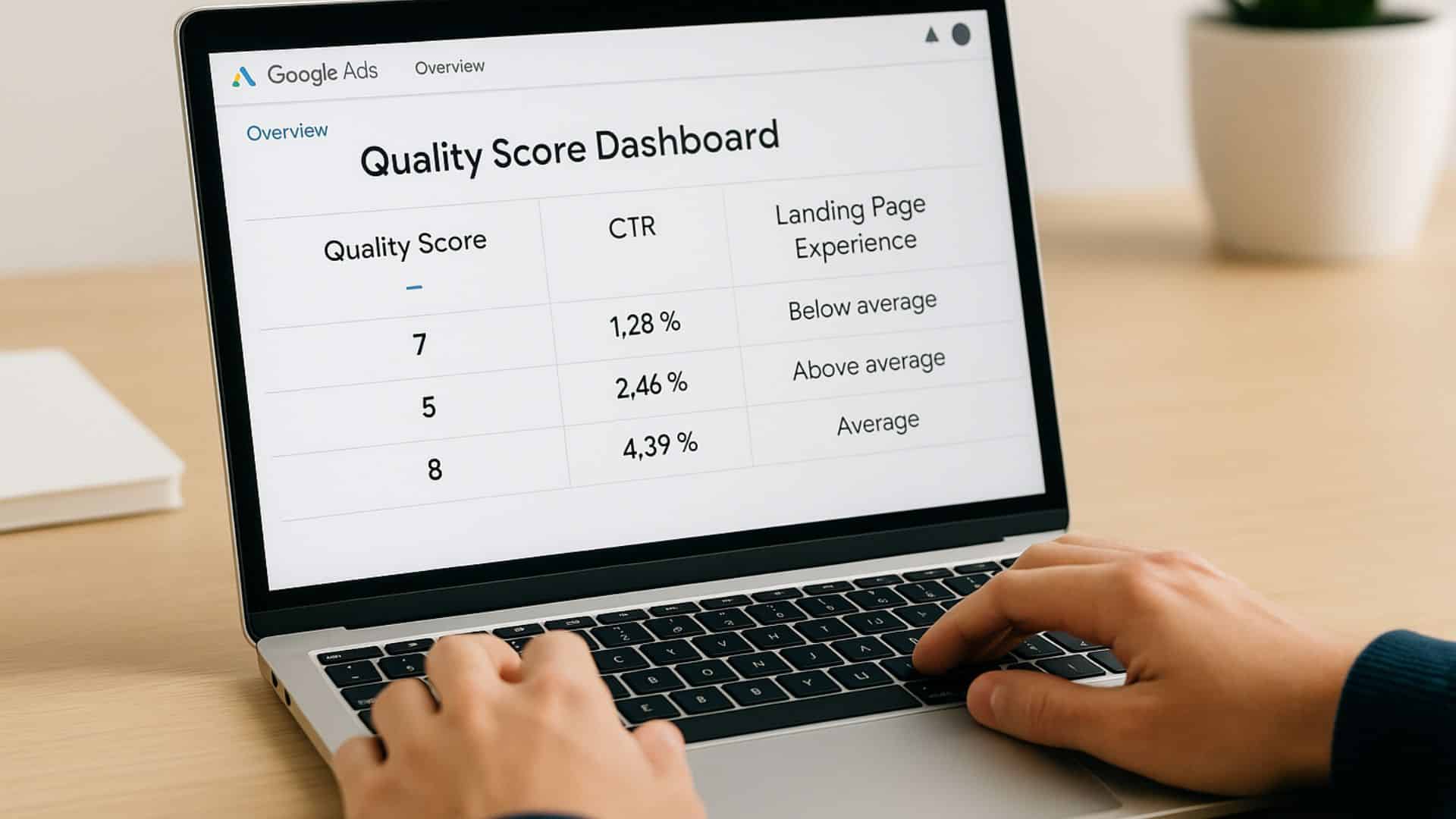
How Does Google Ads Quality Score Actually Work?
Quality Score is Google’s internal rating of your keyword and ad quality on a scale of one to ten. The scoring combines keyword relevance, ad messaging, and landing page experience to predict if users are likely to click your ad.
Quality Score affects two critical things:
- How much you pay for each click
- Whether your ads appear above competitors
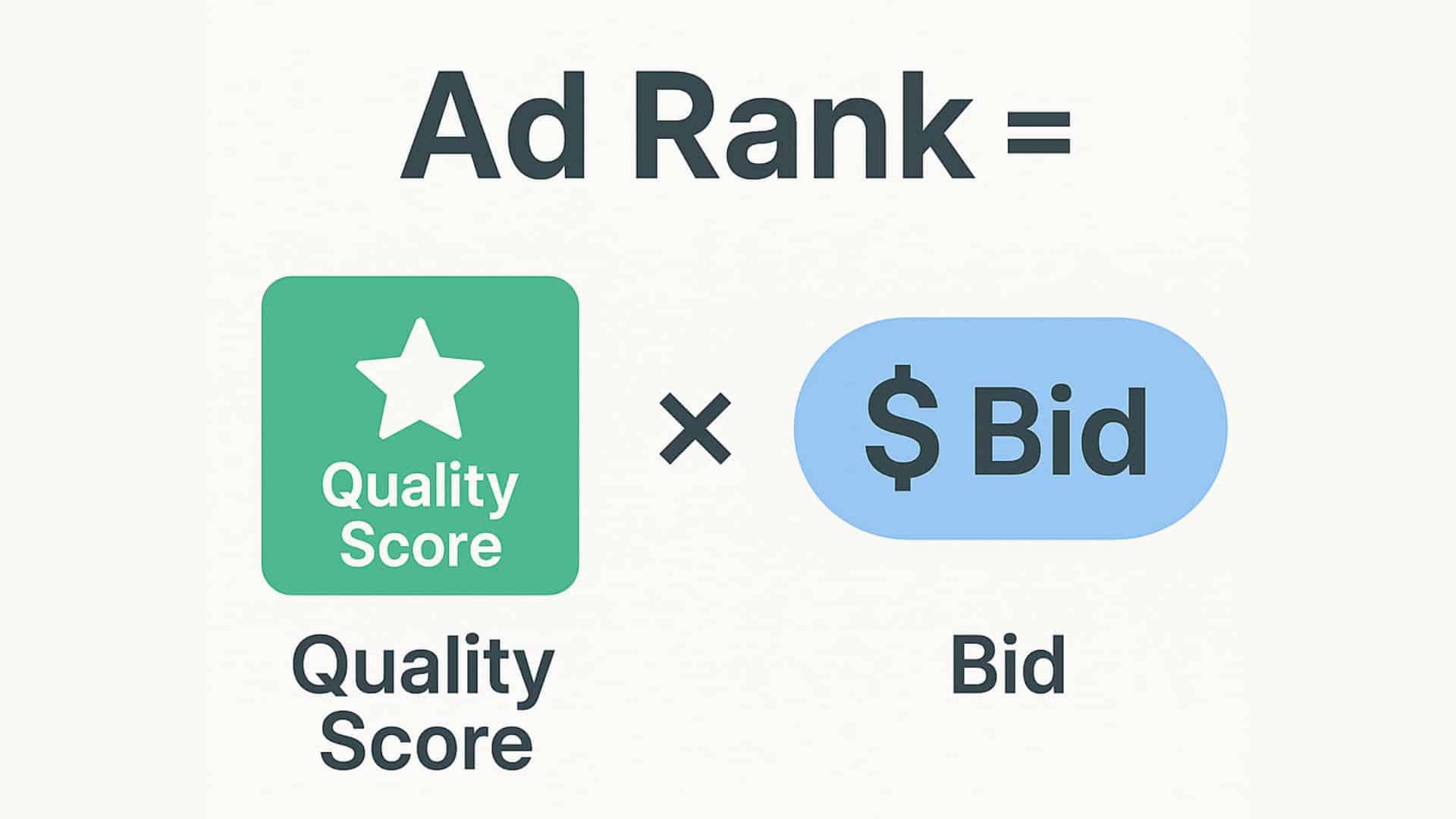
A simplified version of Google’s formula is:
“Ad Rank = Quality Score multiplied by Bid”
Even if you bid less than others, a better score can push you higher.
Quality Score Factors and Their Impact
| Factor | What It Measures | Direct Impact | How to Improve It |
| Expected CTR | Likelihood a user will click your ad | Higher CTR lowers CPC and boosts visibility | Use relevant keywords, stronger headlines, clearer value, extensions |
| Ad Relevance | Match between keyword and ad message | Ensures ads show to the right users | Tight ad groups, keyword-aligned headlines, specific offers |
| Landing Page Experience | Usefulness, speed, mobile readiness | Poor pages drag down whole campaign | Faster load, clearer structure, better content, aligned message |
| Historical Performance | How your ads performed in the past | Influences Google’s trust in your ads | Maintain consistent optimisation, avoid sudden changes |
| Keyword Intent Match | Whether keyword matches user search intent | Determines click likelihood | Use intent focused keywords, separate generic from high intent |
| Account Structure Quality | How well your campaigns are organised | Better structure improves relevance | Split campaigns logically, avoid overcrowded ad groups |
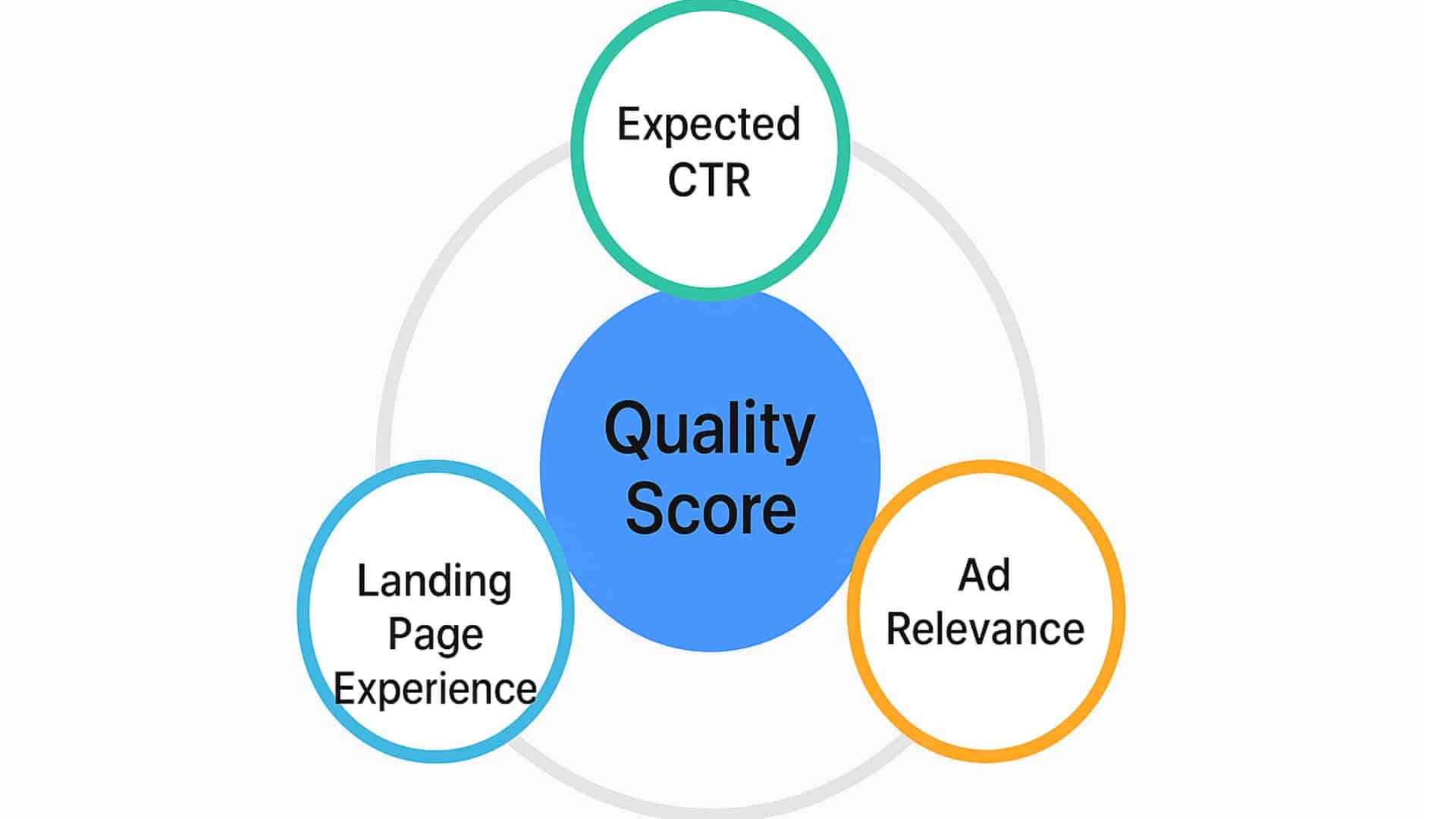
What are the three components of Quality Score?
Here is how each part works:
| Component | What It Measures | Why It Matters |
| Expected CTR | How likely people are to click your ad | High CTR signals usefulness to users |
| Ad relevance | How closely your ad matches keyword intent | Prevents mismatched or broad targeting |
| Landing page experience | How helpful, fast, and easy your page is | Poor experience hurts score instantly |
Together, these build Google’s prediction of user satisfaction.
Why Does Quality Score Affect Your Cost in Google Ads?
Higher Quality Scores reduce the amount you pay per click.
This is because Google rewards ads that provide strong user experience. If your ads score well, Google earns more from returning users and does not need to charge you more.
Your CPC can drop by:
- 30 percent for high Quality Scores
- 50 percent in some competitive service industries
A low score forces Google to show your ad less often or increase the cost needed to compete.
Real example:
A local service business targeting “aircon servicing” with a score of 4 pays almost double per click compared to another advertiser with a score of 8.
What Affects Expected CTR in Google Ads?
Expected CTR is Google’s prediction of your ad performance before it runs.
It is influenced by your historical click patterns, your keyword type, and how people generally behave on that SERP.
Improving CTR tends to be the quickest way to raise Quality Score.
Ways to improve expected CTR
- Match keyword intent precisely
- Use emotional and practical triggers in ad copy
- Include price, availability, or location signals
- Add countdown timers for seasonal campaigns
- Use extensions that increase screen space
Stat block for EEAT:
“Ads with highly relevant copy can lift CTR by 20 to 30 percent on average.”
(Source: Google Ads Help Center)
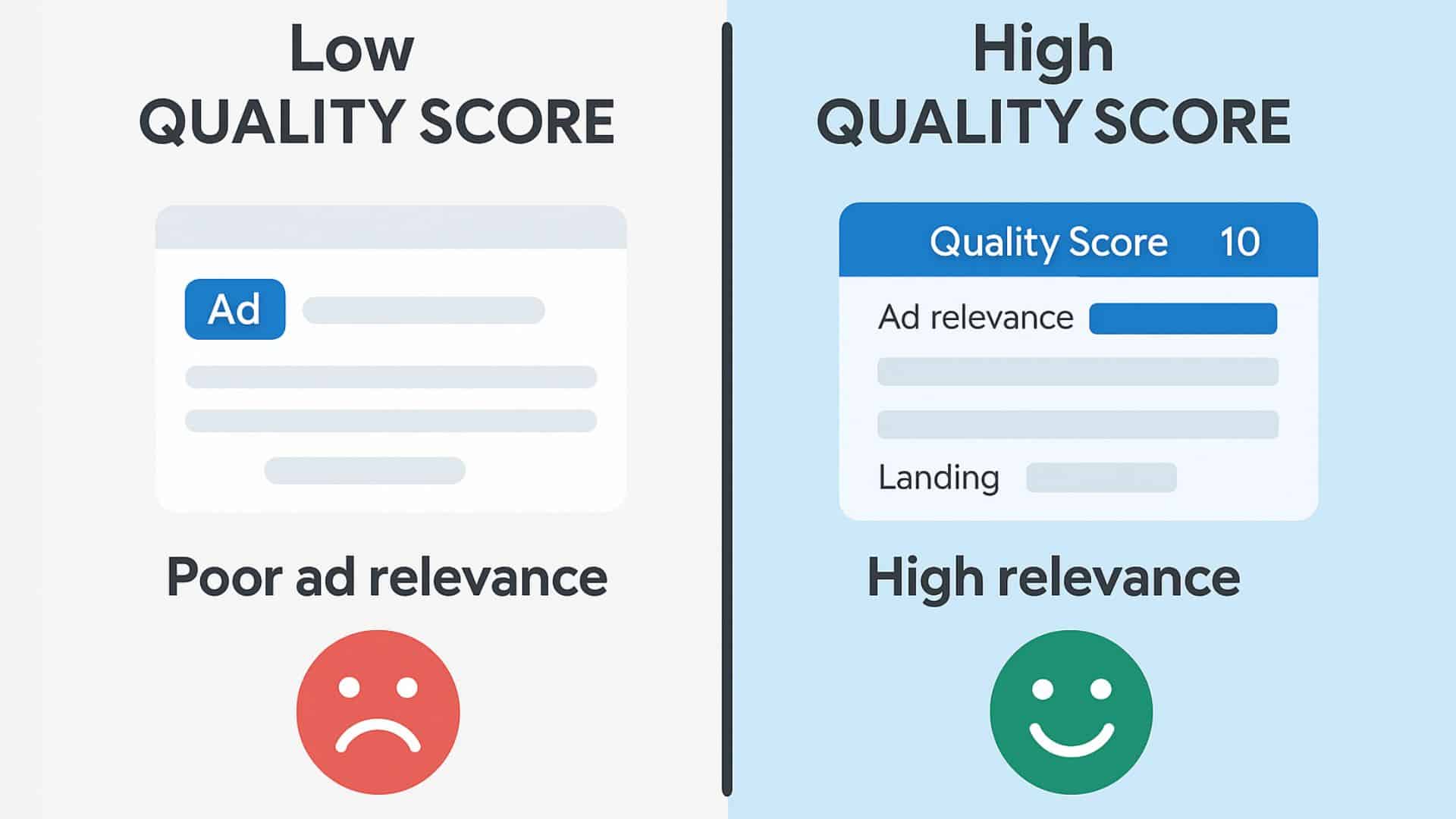
What Makes an Ad Relevant for Google’s Quality Score?
Ad relevance measures how closely your ad matches what the user searched.
If your keyword is “tuition centre near me”, but your ad talks about “online classes only”, your score drops.
Checklist for strong ad relevance
- Keyword appears naturally in headlines
- The offer matches search intent
- Each ad group targets a tight keyword theme
- RSAs have at least 10 strong headlines
- Headlines answer the user intent directly
A good structure is:
- 1 campaign
- 1 service or theme
- Multiple tightly grouped ad sets
- Clear message alignment
This prevents diluted relevance that lowers scores.
How Does Landing Page Experience Influence Quality Score?
Landing page experience is one of the strongest Quality Score signals. Google evaluates the page based on:
- Speed
- Mobile friendliness
- Clarity
- Transparency
- Keyword alignment
- Actual helpfulness
If the landing page is slow, confusing, or vague, Quality Score drops even if your ads are perfect.
Landing page features Google prefers:
- Loads under 3 seconds
- Clear headline matching ad keywords
- Direct answers to user intent
- No clutter
- Easy navigation
- No forced registration
- Bilingual support where relevant
You can use this simple test:
If a user cannot understand what your business offers in 3 seconds, Quality Score suffers.
How Do You Improve Google Ads Quality Score?
Improving Quality Score means improving the entire search journey from keyword to landing page. Below are the most reliable actions.
Rewrite ads to improve intent match
Show clear, direct value. Avoid fluffy headlines and irrelevant wording.
Split ad groups for higher relevance
One keyword theme per group. This helps Google understand the relevance faster.
Revamp landing pages
- Add clear headings
- Make the page mobile first
- Include authentic proof like case studies or testimonials
- Answer the search intent directly
Improve page speed
Use tools like:
- PageSpeed Insights
- Cloudflare caching
- Lightweight themes
Clean up negative keywords
Prevent unwanted traffic from draining CTR.
Boost engagement signals
Click friendly layouts, strong call to actions, scroll depth, and fast loading help Quality Score indirectly.
What Is a Good Quality Score in Malaysia’s Competitive Niches?
A good Quality Score is anything above 7.
In competitive sectors:
- Legal
- Finance
- Education
- Property
Scores between 5 and 6 are normal.
Anything below 4 indicates serious relevance or landing page issues.
Quick regional insight
Keywords related to delivery, home services, and insurance tend to have higher CTR benchmarks due to strong local demand.
When Does Quality Score Not Matter as Much?
Quality Score matters most for Search Ads. For certain formats, the impact is lower:
- Video
- Display
- Performance Max
However, poor landing pages still reduce overall performance across campaigns.
Still Unsure How to Improve Your Quality Score?
Understanding Quality Score is the first step. Applying the principles consistently is what drives real savings and better visibility. A well structured campaign with clean data and strong landing pages always outperforms a high budget campaign with poor alignment.
Conclusion
Quality Score reflects your campaign’s relevance, experience, and real value to users. Higher scores mean lower costs, better visibility, and more predictable performance. With the right strategy and reliable optimisation practices, your ads become more competitive without increasing your budget.
Want a deeper review of your campaign structure? Explore our Google Ads management service for hands on optimisation that aligns with Quality Score best practices.