What is Search Intent?
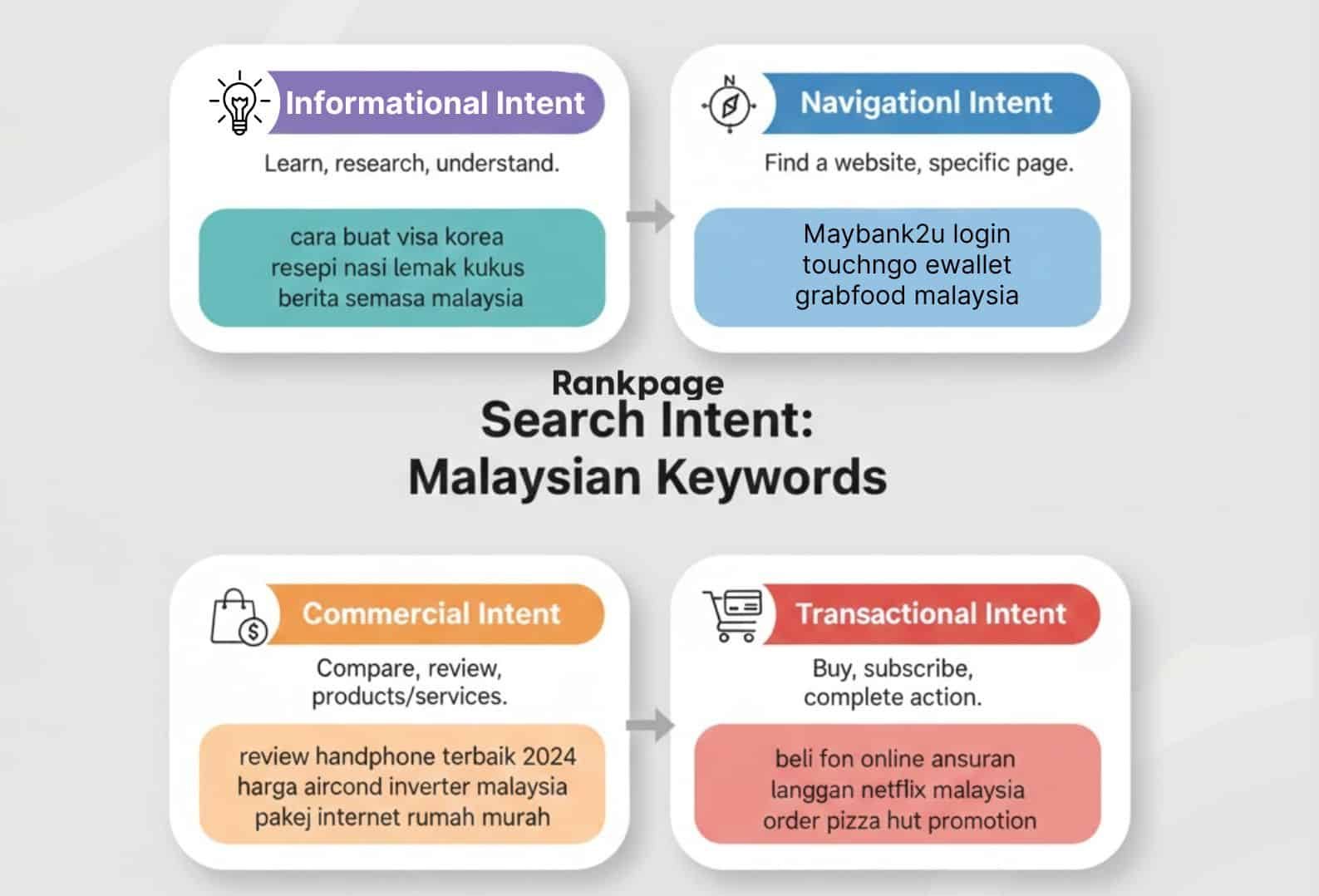
Search intent (or user intent) is the underlying goal behind a query. Traditionally broken into four core types:
- Informational: “How to renew driving licence Malaysia”
- Navigational: “MyEG login”
- Commercial: “Best accounting software for SMEs Malaysia”
- Transactional: “Buy thermal printer online Malaysia”
Note: One query can have mixed intent. For example, “Shopify payment gateway Malaysia” might be informational and transactional.
How to Detect Intent (For Local Businesses)
Use this 5-step method:
1. SERP analysis:
Check the top 10 results for the query. Are they product pages, guides, tools?
2. Language cues:
Keywords like “review”, “near me”, “buy”, “setup”, “how to” hint at intent.
3. Search features:
Are there featured snippets? Local packs? Product carousels? These are intention revealed.
4. User behaviour data:
Use GA4/Hotjar to study how visitors behave after landing.
5. Tool support:
Tools like Ahrefs, Semrush, and SurferSEO provide intent tags or SERP analysis.
Intent x Content Format Matrix
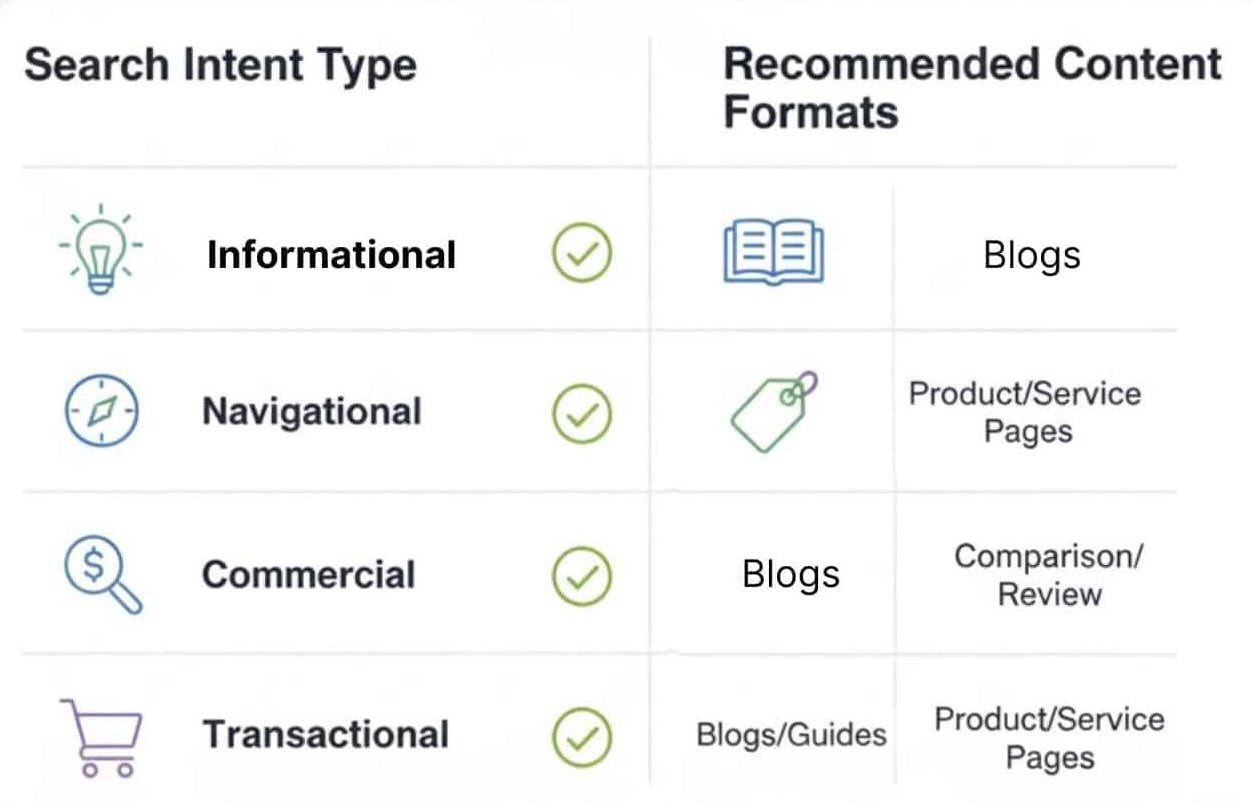
Not all queries need a 2000-word blog. Match content type to the intent:
Intent | Format Examples |
Informational | Blogs, FAQs, video explainers |
Navigational | Clear landing page, business directory listing |
Commercial | Comparison pages, listicles, expert reviews |
Transactional | Product pages, sales landing page, checkout funnel |
Mixed | Hub + spoke content, interactive tools + text combo |
SEO Workflow for SMEs: From Research to Results
1. Keyword Research:
Group keywords by intent (info vs transactional)
2. SERP Audit:
Study what formats rank, map to content structure
3. Content Audit:
Check if current pages match updated intent
4. Rewrite / Expand:
Add multimedia, update headers, change CTA
5. Internal Linking:
Link between different intent pages
6. Track KPIs:
Monitor CTR, scroll depth, snippet wins, bounce rate, conversion %
Handling Mixed or Ambiguous Intent
Some queries aren’t clear. Example: “Malaysia payroll software”
Solution: Use layered content strategy:
- Intro: summarise options (for commercial intent)
- Mid: explain features (informational intent)
- End: CTA + pricing guide (transactional intent)
Also use FAQs and structured schema to hit different angles.
Understanding the basics of search intent is just the start. For a deeper look at how when combined with user behaviour shapes SEO strategy, check out our complete guide to Search Intent & Search Behavior: The Complete SEO Strategy.
How AI & Voice Search Are Changing Intent Matching
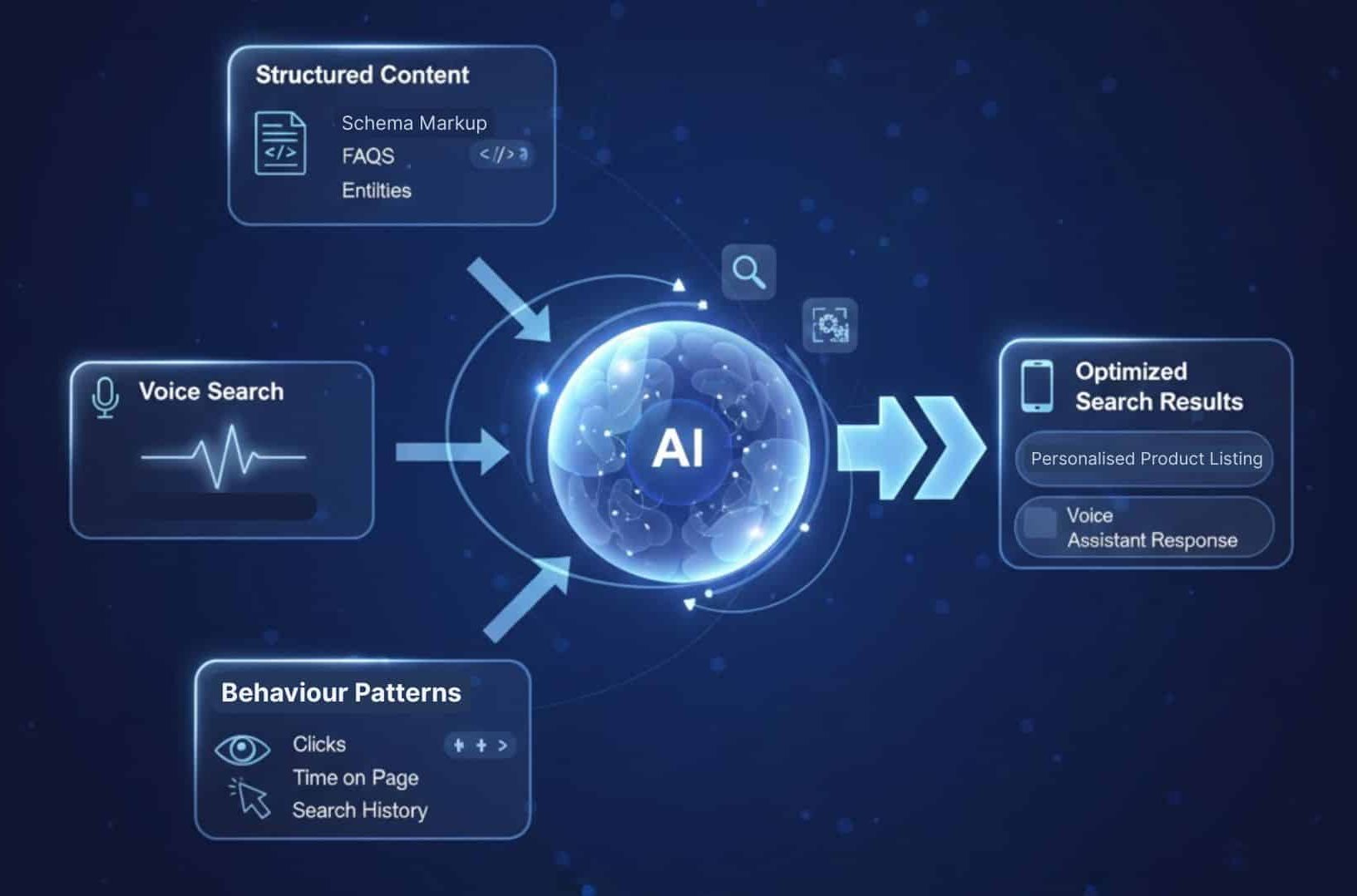
As search technology evolves, so does the way users express their intent. AI-generated results and voice searches are changing how content should be structured to stay visible, relevant, and helpful.
- Voice search is more conversational
Users now speak their queries like natural questions. For example: “Where can I buy printer ink near me?” This means content needs to match spoken language patterns, not just typed keywords. - AI snippets reward clarity and structure
With tools like Google SGE and Bing Copilot summarising pages, content that uses schema, clear formatting (like bullet points), and short, direct answers is more likely to be surfaced. - Zero-click results are increasing
Many users get their answers directly from search results without clicking through. Optimising for visibility (featured snippets, images, and concise definitions) builds brand presence even if traffic doesn’t follow immediately.
Optimise for AI-Driven Search Experiences
To stand out in this changing landscape, focus on:
- Structuring content for featured snippets (such as., bullet lists, tables, FAQs)
- Writing concise and scannable answers, especially at the top of the page
- Using descriptive image alt text and captions to support visual search
- Demonstrating author credibility and strong page experience (EEAT)
Example: Shopify Malaysia Query Breakdown
Query: “Shopify Malaysia payment gateway”
- Informational intent: “What gateways are supported on Shopify in Malaysia?”
- Commercial intent: “Which payment gateway is cheapest or most popular?”
- Transactional intent: “How do I integrate Paydibs with Shopify?”
Content plan: One main hub article with internal links to three focused blogs, each tailored to a different search intent.
Case Study: Turning One Blog into Three Wins
Before:
- Generic long-form post on “Shopify payments”
- Outdated info, lacked visuals
- Ranked on Page 3 of Google
After:
- Split into three intent-specific articles
- Used visuals, tables, FAQs, and local context
- 40% higher CTR
- Featured snippet for “Shopify Malaysia gateway”
- Page 1 ranking within 30 days
Metrics to Monitor
- Snippet wins (Google Search Console)
- Time on page / scroll depth (GA4)
- Intent fulfilment (user action after visit)
- Keyword cannibalisation (avoid duplicate intent pages)
Conclusion: Match What People Really Want
Search intent is the foundation of great SEO. In the future, that means not just understanding user goals, but also choosing the right format, language, and structure that helps content stand out in AI-powered search.
At Rankpage, our SEO strategies go beyond basic optimisation. We help businesses decode intent, structure content for real user journeys, and adapt to changes in search behaviour. From SERP audits to AI-driven content frameworks, we turn insights into measurable visibility gains. Ready to align your content with real user intent and actually rank for it? Our team is ready to guide you through aligning strategy, formats, and visibility.