What is Search Intent?
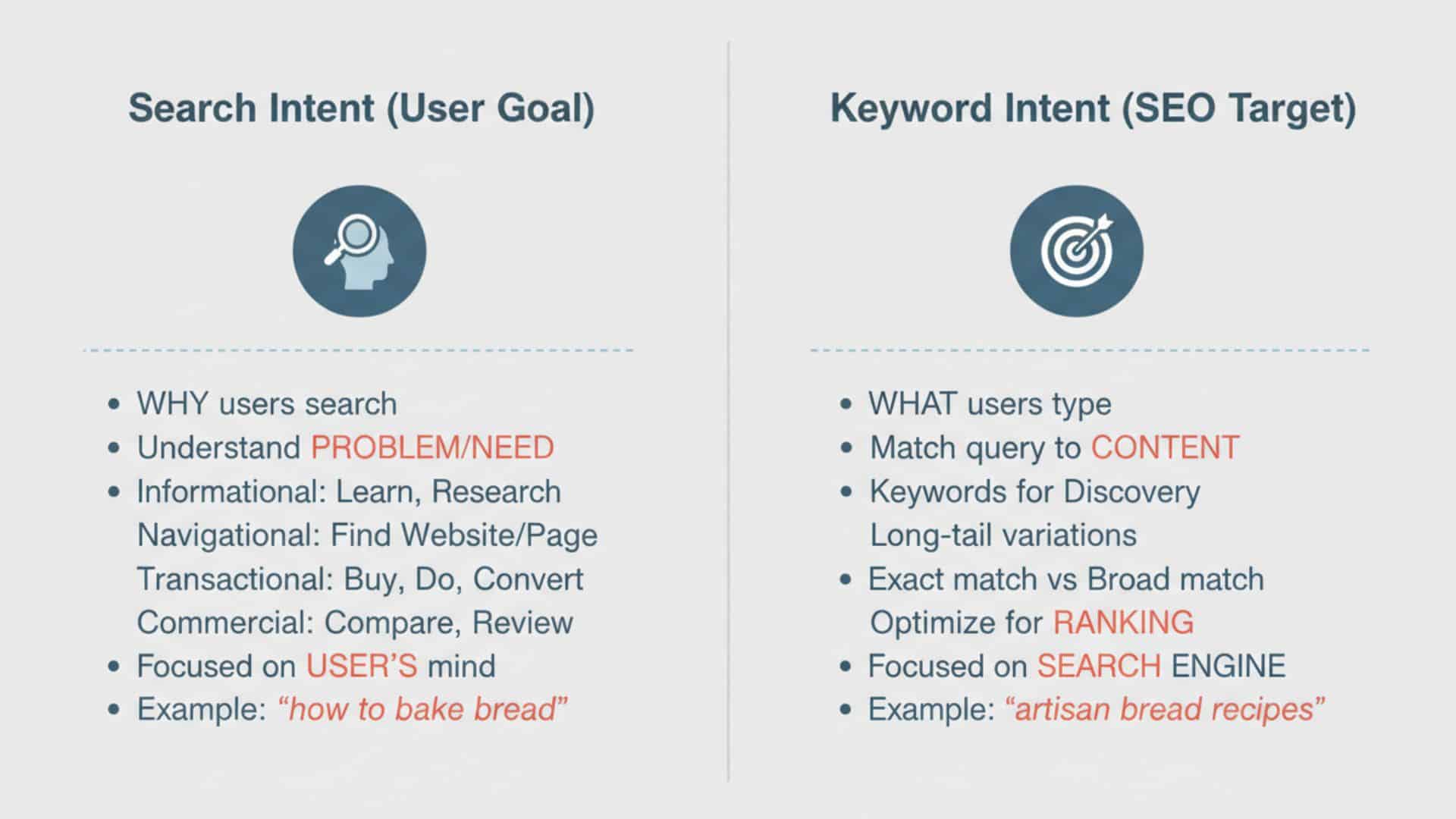
Search intent is the underlying purpose behind a user’s search. It explains why someone enters a particular query. Google prioritizes content that matches the searcher’s intent, whether informational, transactional, navigational, or commercial. To understand how search intent differs from the terms marketers target, see our guide on the difference between search intent and keyword intent.
“It’s not just about keywords anymore. Google wants outcomes.” Riff Chen, Rankpage Regional Manager.
SEOs often break down intent types into slightly different categories:
- Informational: Users are seeking knowledge on learning or understanding. Example: “What is SEO?”, “How does SEO work?”
- Navigational: Users are looking for a specific website or brand. Example: “Moz SEO blog”, “Shopee Login”
- Commercial Investigation: Users are comparing options. Example: “Best SEO tools 2025”, “Ahrefs vs SEMrush”
- Transactional: Users are ready to take action, to buy. Example: “Buy Ahrefs subscription”,”Sign up for Rank Tracker”
- Local: Finding nearby services such as, “SEO agency in Kuala Lumpur”, “Daycare in Penang”
Tip: Use modifiers like “cheap”, “best”, “near me”, “review” to detect deeper intent layers.
What is a Search Query?
A search query is the exact phrase a user types into a search engine. While search intent describes why someone searches, the query shows what they are searching for.
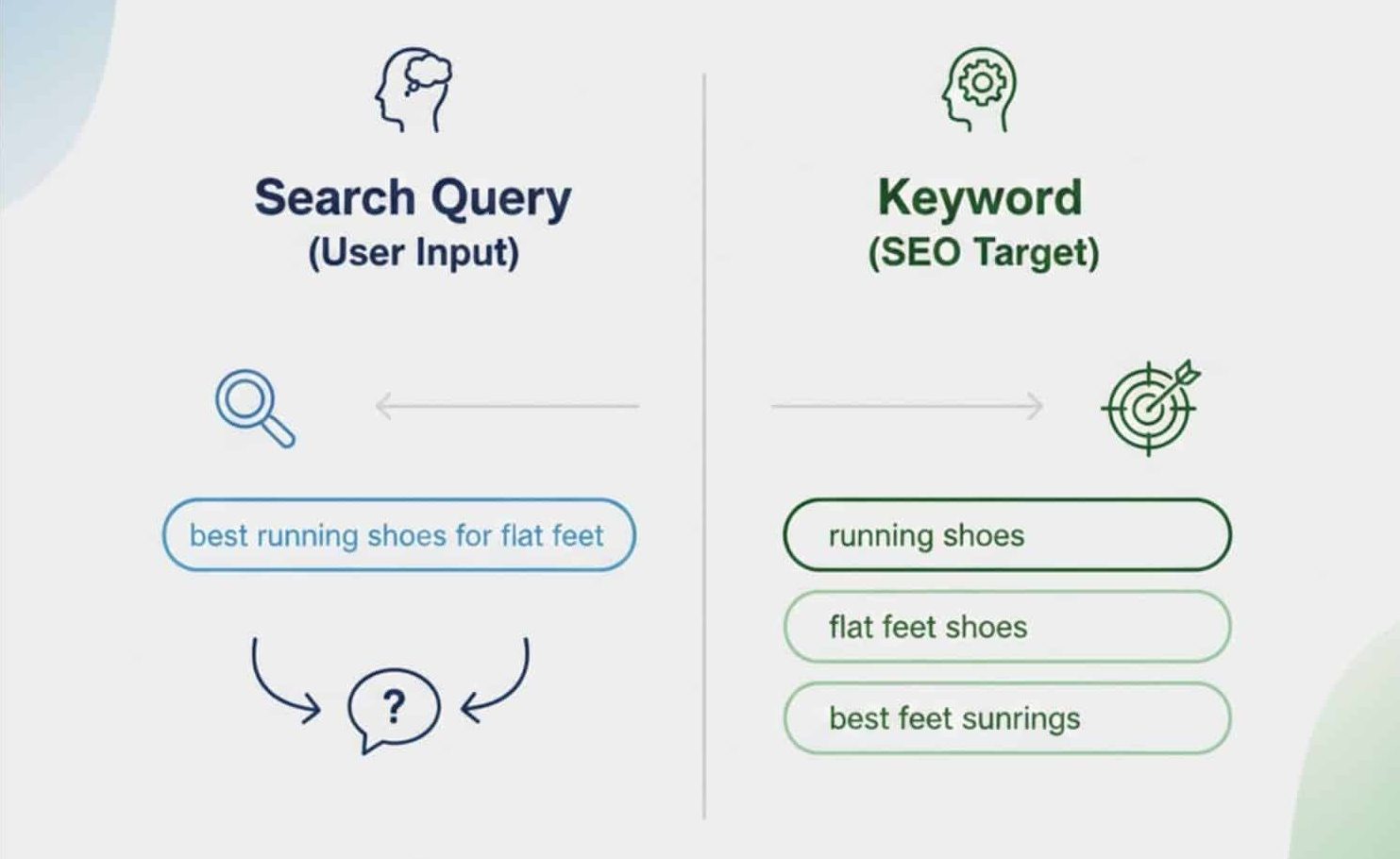
For example:
- “SEO”: This is a broad, vague query. The intent could be informational (What is SEO?), commercial (Best SEO tools), or even navigational (Rankpage SEO).
- “Hire SEO consultant for Shopify Malaysia”: This is a precise query with clear transactional intent, often from a user ready to take action.
To go deeper into how user-entered queries differ from SEO keywords, read our guide on the difference between search queries and keywords.
Types of Queries (Quick Overview)
- Short-tail: Broad, 1–2 words (like. “SEO”). High volume, vague intent.
- Long-tail: Specific, 3+ words (for example. “best SEO agency for Malaysian SMEs”). Lower volume, clearer intent.
- Branded: Mentions a company or product ( “Rankpage SEO pricing”).
- Non-branded: Focuses on solutions (such as, “SEO tools for beginners”).
These variations often overlap with search intent types and help guide your keyword strategy. This builds better rankings, more qualified traffic, and higher conversions especially in competitive SERPs. For a more detailed breakdown, explore our comparison of short-tail vs long-tail queries and how they influence SEO strategy.
How Search Behavior Impacts SEO
Search behavior refers to how users interact with search engines before, during, and after a query. Understanding these behaviors helps identify key trends:
- Query-driven clicks: High CTRs indicate alignment between your content and user expectations, while low CTRs may signal mismatched headlines, meta descriptions, or formats.
- Preferred content formats: Blog posts, videos, product pages, or comparison tables serve different intent types. Analyzing top-ranking content reveals what formats resonate most.
- Device-specific behavior: Mobile users tend to skim and expect speed, voice search prioritizes concise answers, and desktop users engage with long-form content or tools. Adjust your layout and structure accordingly.
- Behavioral insights: Tools like Google Search Console, Analytics, and heatmaps show where users engage or drop off, informing better headings, CTAs, and content flow.
By leveraging these insights, you can optimize content structure, headings, and calls to action to better match what users are actually looking for.
Aligning Content with Intent
Creating high-performing content starts with matching it to the right search intent. Google favours pages that align not just with keywords, but with the purpose behind the search.
Steps to optimize content:
Step 1: Perform SERP Intent Analysis
Search your target keyword and analyse the top results. Are they blog posts (informational), product pages (transactional), or comparison articles (commercial investigation)?
Step 2: Map Content Type to Intent
Choose the right structure:
- Informational → how-to guides, FAQs
- Transactional → product pages, pricing
- Commercial → comparisons, feature breakdowns
Step 3: Optimise Structure & Keywords
Structure your content to reflect this. Use clear headings, include semantic keywords, and apply relevant schema (like FAQ or HowTo) to support both search engines and users. For example, a commercial investigation query may benefit from comparison tables and pros/cons blocks.
Step 4: Support User Decision-Making
Add visuals, tables, pros/cons, or decision guides based on what aligns with the user’s stage in the funnel.
Step 5: Test & Monitor Engagement
Track bounce rate, dwell time, and conversions. If users exit quickly, the intent may not match. Refine the format, CTA, or depth of content accordingly.
Advanced Intent Strategies for 2026
Modern search engines are increasingly AI-first. They analyse behaviour, context, and relationships between queries far beyond keywords. You can learn exactly how this works in our deep dive into search intent in Google SGE and AI-driven search.
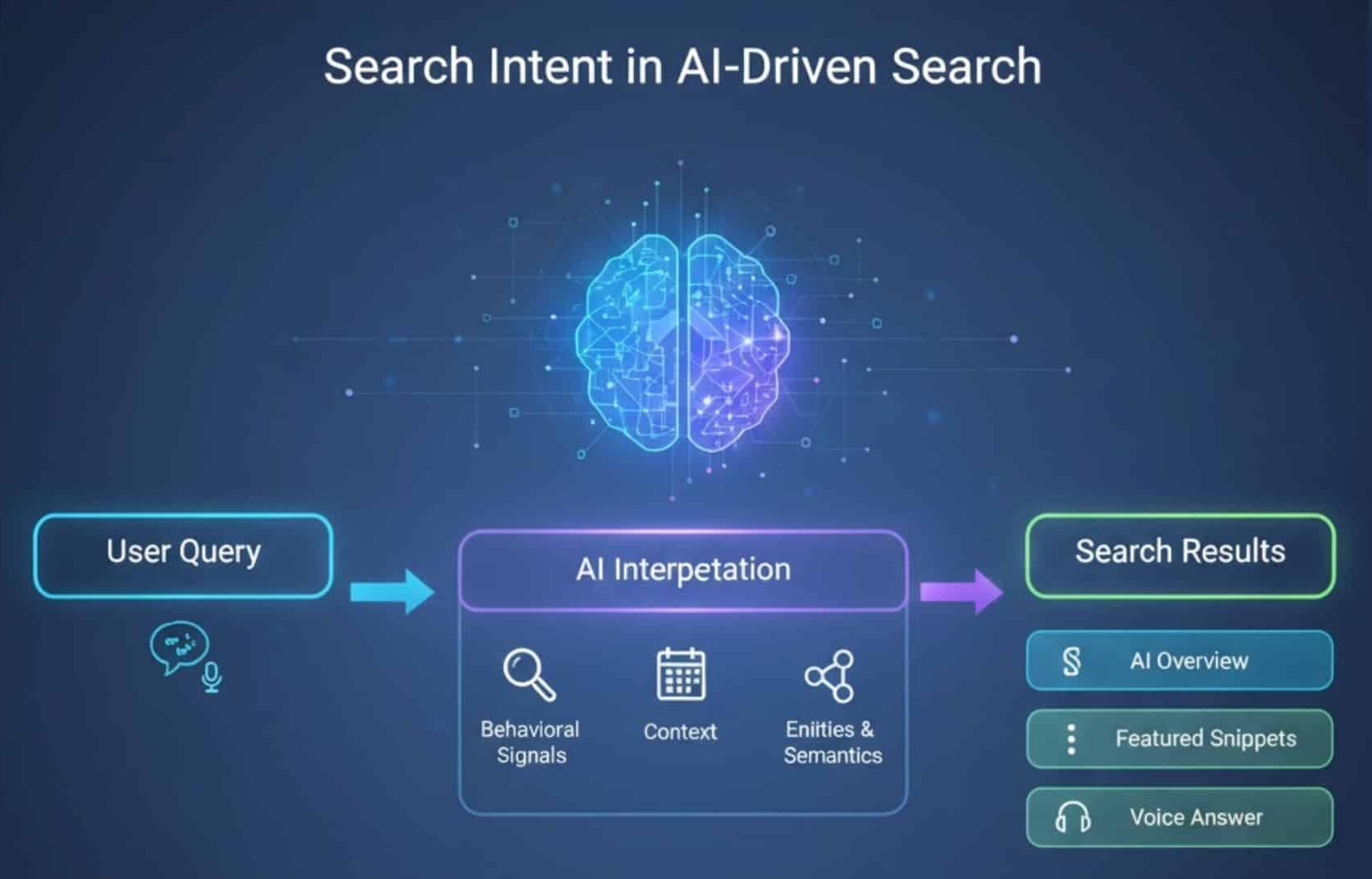
Here’s how to future-proof your strategy:
Optimise for AI-Driven Search Engines
Tools like Google SGE and ChatGPT Search focus on concise, structured answers. Content should be skimmable, well-formatted, and backed by real data or expert input.
Topic Clustering for Authority
Group related pages under a central pillar to build topical depth. Clusters help search engines understand your expertise across connected topics.
Answer Conversational Queries
Include natural phrasing and voice-friendly language. Use FAQ schema and structured answers to capture voice search and featured snippets.
Invest in Entity SEO
Ensure your brand, author, and topic entities are clearly defined through consistent use of schema, citations, and structured content.
Intent vs Funnel Stage: How to Combine Both
Search intent isn’t isolated from your buyer journey. Here’s how content format, keyword targeting, and user needs align by funnel stage:
Funnel Stage | Intent Type | Example Content |
TOFU | Informational | “What is SEO?” |
MOFU | Commercial Investigation | “Best SEO tools for SMEs” |
BOFU | Transactional | “Hire SEO consultant Malaysia” |
By mapping content this way, you can guide users from discovery to decision using purpose-driven content at each step.
Common Mistakes in Mapping Search Intent
Even well-meaning SEO strategies fail when intent isn’t handled correctly. Avoid these common traps:
- Relying on Keywords Alone
Without SERP analysis, you risk misjudging what users really want. A high-volume keyword might serve informational intent when you’re pushing sales content. - Using the Wrong Content Format
A blog post for a “buy now” keyword or a product page for an exploratory search can sabotage rankings and conversions. - Failing to Adapt as SERPs Evolve
Google often shifts what ranks for the same query. Revisit content regularly to ensure the intent match still holds. - Ignoring Local and Device Context
A query on mobile may signal urgency; a desktop search might reflect deeper research. Tailor CTAs and formats accordingly.
Conclusion: Aligning With Search Intent is the New SEO Standard
Search intention is the foundation of how content is found, judged, and chosen in future.
Whether you’re building an eCommerce store, a B2B funnel, or a local service brand, aligning content with what your audience is truly looking for is your edge in search, conversions, and authority.
Need help building an intent-led content strategy or cluster-based SEO plan? The SEO team at Rankpage specialises in helping brands create content ecosystems that win in both Google and AI-powered search with a strong focus on SME growth.